SINGAPORE - The collapse of the ventilation duct in a Nex mall cinema was due to "a significant amount of water" accumulating in the insulation material surrounding the duct.
The investigation findings were released by the Building and Construction Authority in a statement on Monday (Dec 7), following the incident at a Shaw Theatres cinema hall on Aug 30 that left two moviegoers injured.
The water accumulation was a result of "unforeseen excessive condensation over a sustained period", and its weight had overloaded the air-conditioning and mechanical ventilation (ACMV) dropper duct.
The acoustic material surrounding the duct typically serves to regulate the surface temperature around the duct to prevent water from forming due to condensation, and to insulate the noise caused by air travelling through the duct.
Checks on other cinemas' ACMV systems and ducts had found no such excessive condensation, said BCA.
A spokesman for Nex said in a statement on Monday that it will “continue to support and work closely with (its) tenant, Shaw Theatres, throughout the course of rectifications for the planned reopening of their premises next year”.
It did not say if checks on other ACMV ducts in the building will be conducted.
Shaw Theatres had conducted inspections at its six cineplexes following the incident, and all were found to be safe.
Similarly, Golden Village cinemas said it had conducted an additional round of inspection and maintenance checks with BCA officers, after recommendations from the authority.
It also has an ongoing monthly maintenance schedule for all its cinemas to be inspected by professional ACMV contractors.
BCA said it will be issuing an advisory to the building owners and the industry on the importance of regular maintenance and to share good practices for the design and installation of ACMV systems.
Article From & Read More ( Ventilation duct at Nex mall fell due to accumulated water, says BCA after probe - The Straits Times )
https://ift.tt/2VLoUXx
Business
SINGAPORE — Singtel, as part of a consortium, has just obtained one of Singapore's first digital banking licenses — but the telecom company's entrance into the sector is not aimed at bringing down established banks, an executive told CNBC on Monday.
The company, which is Singapore's largest telco, applied for the license with ride-hailing and payments firm Grab. The consortium became one of four successful applicants, and its license will allow it to take deposits and offer banking services to retail and corporate customers, financial regulator Monetary Authority of Singapore announced on Friday.
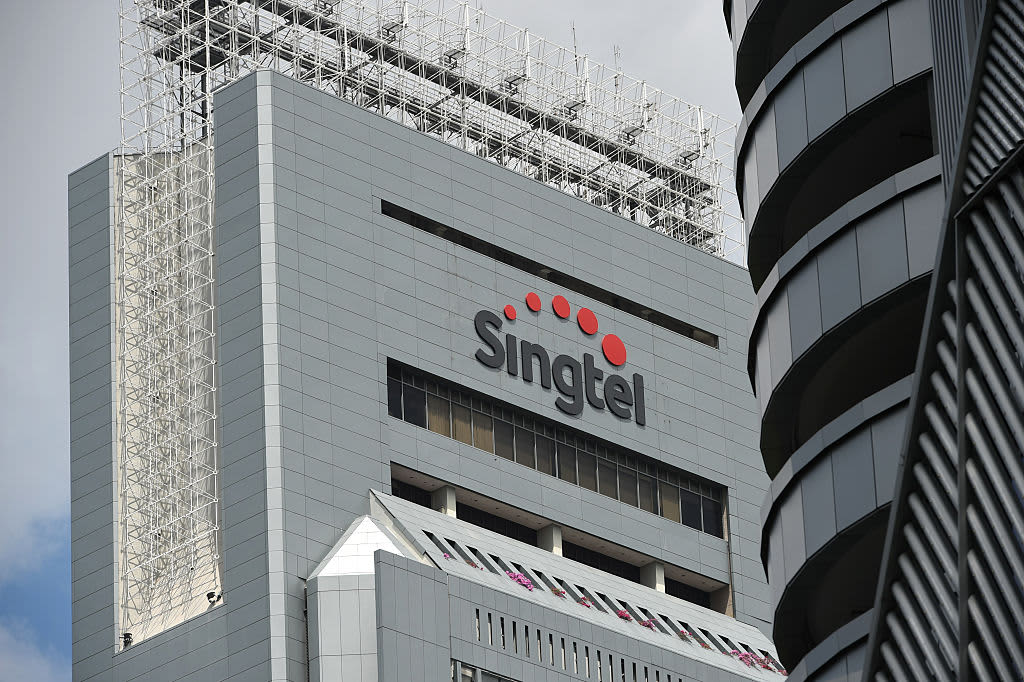
Singtel's headquarters in Singapore.
Roslan Rahman | AFP | Getty Images
"We're coming in not like your typical fintech start-up trying to bring down the, you know, incumbent banks," Arthur Lang, chief executive of Singtel's international business, told CNBC's "Squawk Box Asia" on Monday.
Singtel's stock jumped by around 5.6% on Monday morning, while shares of all three Singapore-listed banks declined. United Overseas Bank — the smallest of the trio — fell by 1.5%, while DBS Group Holdings and Oversea-Chinese Banking Corp dipped by around 1.3% and 1.1%, respectively.
Unlike in many markets, established banks in Singapore — a major Asian financial center — have "successful" digital businesses of their own, said Lang. That makes the banks "very strong and formidable" competitors to reckon with, he added.
However, the new entrant can offer "unmet" banking needs in Singapore and the region, said Lang. He explained that lockdown measures as a result of the Covid pandemic has shifted many activities online, and people now realize it's much more convenient to make banking transactions digitally.
We're coming in not like your typical fintech start-up trying to bring down the, you know, incumbent banks.
Arthur Lang
Singtel CEO, International
Singapore's regulator said it expects the new digital banks to start operations from early 2022. Lang said the Singtel-Grab consortium aims to fill around 200 roles by end-2021.
'Limited' threat to banks
The new entrants should pose "limited" threat to the traditional banks, said Krishna Guha, an equity analyst from investment bank Jefferies. Guha said in a Monday note that he's maintaining his positive view for the Singapore banking sector, with "buy" ratings for OCBC and UOB, and a "hold" rating for DBS.
Piyush Gupta, chief executive of DBS, said the bank — the largest in Singapore and Southeast Asia by assets — is "in a position to hold our own."
"The Singapore banks have been down the digital path now for several years, and I like to believe that we have one of the best digitally banked markets in the world," he told CNBC's "Squawk Box Asia" on Monday.
"There's almost no segments in the market which are underbanked or that we don't touch," he said, adding that DBS has managed to reach "niche spots" such as the older Singaporean population and micro-businesses, even through the pandemic.
Still, Gupta said he's always "wary" of competition and will watch with "a careful eye" for what the new entrants will bring to the industry.
Article From & Read More ( Singapore's digital bank license winner says it's not trying to bring down established banks - CNBC )
https://ift.tt/33KGm2P
Business
SINGAPORE - Singapore's biggest fintech festival and innovation week kicks off on Monday (Dec 7) with a star-line up of speakers, including Microsoft co-founder Bill Gates, Google chief executive Sundar Pichai and New Zealand Prime Minister Jacinda Ardern.
Deputy Prime Minister Heng Swee Keat, who is also Coordinating Minister for Economic Policies and Minister for Finance, will open the Singapore FinTech Festival and Singapore Week of Innovation and Technology (SFF x Switch 2020) by speaking on the state of the economy.
Owing to the Covid-19 pandemic, this year's festival will largely be held online from Monday till Friday.
Events will happen round the clock and participants can visit technology exhibitions, attend masterclasses by fintech and deep tech experts, as well as network with private equity and investment firms from around the world, said a joint statement from organisers Monetary Authority of Singapore (MAS) and Enterprise Singapore.
There will also be live sessions with climate scientists in the polar regions, the Amazon forest and the Himalayas.
About 1,400 speakers are slated to speak, among them finance and technology leaders, entrepreneurs and policymakers, including
Facebook co-founder Eduardo Saverin, the International Monetary Fund managing director Kristalina Georgieva and Microsoft chief executive Satya Nadella.
In addition to the online sessions, there will be satellite events held in cities around the world from Kampala in Uganda to New York and Shenzhen, where people will be able to visit technology showcases, among other things.
[[nid:498138]]
In all, the festival will feature more than 600 sessions, 1,000 exhibitors, and 27 international pavilions.
The organisers said more than 60,000 participants from over 7,000 companies across 130 countries are expected.
MAS chief fintech officer Sopnendu Mohanty said: "We are proud to have built an online event platform that continues to serve as a meeting point for the global fintech community and a hive for business activity when the industry needs it the most."
Enterprise Singapore assistant chief executive for innovation and enterprise Edwin Chow said: "Despite the pandemic, we are confident this event will connect and catalyse new partnerships between innovation enablers, enterprises and start-ups from Singapore and the rest of the world."
This article was first published inThe Straits Times. Permission required for reproduction.
SINGAPORE: For those with multiple bank accounts, logging on to numerous platforms for updates and drawing up financial spreadsheets can now be a thing of the past.
This is made possible with the launch of the Singapore Financial Data Exchange (SGFinDex) on Monday (Dec 7), a digital infrastructure that rides on the national digital identity system SingPass.
By providing explicit consent, users can now choose to pool all of their financial data – account balances, credit cards, loans and investments – from several banks and government agencies, and view them on a platform of their choice.
SGFinDex is a joint initiative by the Monetary Authority of Singapore (MAS) and the Smart Nation and Digital Government Group (SNDGG) in collaboration with the financial sector.
Making the announcement at this year’s Singapore FinTech Festival and the Singapore Week of Innovation and Technology, Deputy Prime Minister Heng Swee Keat said: “This is the world’s first public digital infrastructure that allows a person to sign in using his national digital identity and provide consent to obtain his financial information from different financial institutions and government agencies.”
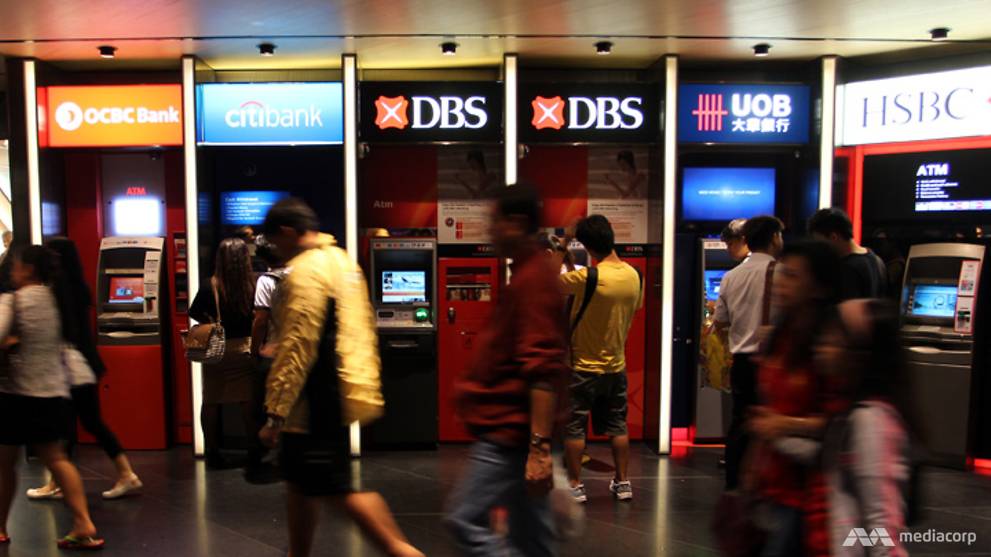
For now, there are seven participating banks – Citibank, POSB and DBS Bank, HSBC, Maybank, OCBC, Standard Chartered Bank and UOB.
Users will also be able to retrieve data from three government agencies – the Central Provident Fund (CPF), Housing Board and the Inland Revenue Authority of Singapore (IRAS) – via MyInfo, the Government’s one-stop data platform.
Information on insurance policies and stock holdings at the Central Depository will be included in the next phase of SGFinDex, although a timeline for this was not given in the joint press release issued by MAS, SNDGG and the Association of Banks in Singapore on Monday.
HOW IT WORKS
Users can opt to view their consolidated financial information on any of the seven banks’ financial planning websites or mobile applications.
Those who are not customers of the seven participating banks can use the Government’s new digital financial planning service MyMoneySense.
According to a list of frequently asked questions (FAQ) about the SGFinDex, information from MyInfo will “always be retrieved” when users make a request to retrieve their banking data from any of the participating banks.
“This is to provide you with a consolidated overview of your personal financial health,” the list added.
If users do not want to share their MyInfo data with their bank, he or she can use the MyMoneySense website instead, according to the FAQ.
Both options will require users to login via SingPass as a form of identity authentication.
After they are logged in, users will be directed to the SGFinDex page where they can select the banks they wish to give consent to release their data. Upon selection, they will be directed to the banks’ respective portals for a second round of authentication.
Once successful, the banks will be displayed on the SGFinDex page as a connected financial institution.
Users will then be taken back to their preferred platform – be it a bank’s app or website, or the Government’s MyMoneySense – where they will be able to view the following:
From banks that have been given consent to release data:
- Current and savings accounts, fixed deposits and joint accounts (Month-end account balance for the last four months)
- Credit cards (Statement balance for the last four months)
- Secured and unsecured loans (Previous month’s statement balance)
- Unit trusts (Previous month’s account balance)
From government agencies:
- Latest available balances across all CPF accounts (For Singaporeans and PRs only)
- Latest outstanding HDB loan balance or monthly loan instalment
- Latest yearly assessable income from IRAS Notice of Assessment
A user’s consent will last for one year from the time it is first provided, and can be revoked any time.
SECURITY SAFEGUARDS
The SGFinDex is designed to ensure data protection and privacy of personal financial information, said the joint press release.
Safeguards include how data can only be retrieved with “explicit consent of the individual” whose identity must be verified through SingPass.
SGFinDex only transmits personal financial data, and does not store any of it. It cannot be used to perform transactions.
All data transmitted is encrypted and can be read only on the financial planning applications or websites that a user has chosen to authorise to receive the data, the joint press release said.
The FAQ stated that in the event of a data breach, circumstances leading to the incident will decide who is held accountable.
For instance, a participating bank will be held responsible if it is determined to have caused the data breach.
Under the Personal Data Protection Act, an organisation that is in breach of any data protection provisions may be liable to a penalty of up to S$1 million.
If the data breach had occurred at the Ministry of Manpower’s MyMoneySense platform or at the SGFinDex infrastructure, the Government will be responsible and will perform the necessary incident containment, forensic investigations and recovery actions in line with established protocols.
Under the Public Sector (Governance) Act, public officers who recklessly or intentionally disclose data without authorisation or misuse the data for a gain may be found guilty and be subject to a penalty of S$5,000 or imprisonment of up to 2 years, or both.
WHAT IT MEANS FOR YOU
Convenience aside, the SGFinDex will help Singaporeans in financial planning, the authorities said.
“Today, our personal financial information is fragmented across multiple entities, and we often take financial decisions, like making an investment or buying a house, without a holistic view of our financial situation,” said MAS chief Ravi Menon.
SGFinDex harnesses digital technology to enhance the financial well-being of Singaporeans, he added.
“(It) empowers the individual to consolidate his financial information for a comprehensive view of his portfolio, and use digital tools like MyMoneySense to make better financial decisions.”
Several participating banks have already tapped on SGFinDex to offer enhanced financial planning services to their customers, such as applications that cover money management, investments, protection needs and retirement planning, said the joint press release.
For instance, Maybank has launched MView – a new service that presents its customers with a comprehensive view of their financial status, including their life insurance policies with its insurance arm Etiqa.
OCBC also has a new digital financial dashboard called OCBC Financial OneView.
Apart from allowing customers to view all of their financial data at a glance, the artificial intelligence-powered dashboard will offer tools and personalised tips to help users manage their finances, plan for retirement, grow and protect their wealth.
In OBCB's recent Financial Wellness Index, more than one-third of respondents said they did not know the best way to grow their wealth.
“SGFinDex will open up more opportunities that allow customers access to simpler and more comprehensive financial guidance towards their goals,” said head of consumer financial services in Singapore Sunny Quek.
Singapore’s largest lender DBS said the launch of SGFinDex is “timely” as the COVID-19 pandemic and its sudden disruption of incomes have “revealed an acute need for financial planning” among many Singaporeans.
The bank’s five million customers can now access SGFinDex through its digital advisory tool NAV Planner “to consolidate their financial data and be served personalised insights and actionable recommendations on how to grow their money”, said its Singapore country head Shee Tse Koon.
Article From & Read More ( Under one roof: Users able to view financial data from bank, government accounts on single platform - CNA )
https://ift.tt/37z5hY0
Business
Article From & Read More ( SIA ready for 'most important logistical challenge in history' — transporting Covid-19 vaccines - TODAYonline )
https://ift.tt/33RF4mB
Business
SINGAPORE - Singapore's biggest fintech festival and innovation week kicks off on Monday (Dec 7) with a star-line up of speakers, including Microsoft co-founder Bill Gates, Google chief executive Sundar Pichai and New Zealand Prime Minister Jacinda Ardern.
Deputy Prime Minister Heng Swee Keat, who is also Coordinating Minister for Economic Policies and Minister for Finance, will open the Singapore FinTech Festival and Singapore Week of Innovation and Technology (SFF x Switch 2020) by speaking on the state of the economy.
Owing to the Covid-19 pandemic, this year's festival will largely be held online from Monday till Friday.
Events will happen round the clock and participants can visit technology exhibitions, attend masterclasses by fintech and deep tech experts, as well as network with private equity and investment firms from around the world, said a joint statement from organisers Monetary Authority of Singapore (MAS) and Enterprise Singapore.
There will also be live sessions with climate scientists in the polar regions, the Amazon forest and the Himalayas.
About 1,400 speakers are slated to speak, among them finance and technology leaders, entrepreneurs and policymakers, including
Facebook co-founder Eduardo Saverin, the International Monetary Fund managing director Kristalina Georgieva and Microsoft chief executive Satya Nadella.
In addition to the online sessions, there will be satellite events held in cities around the world from Kampala in Uganda to New York and Shenzhen, where people will be able to visit technology showcases, among other things.
In all, the festival will feature more than 600 sessions, 1,000 exhibitors, and 27 international pavilions.
The organisers said more than 60,000 participants from over 7,000 companies across 130 countries are expected.
MAS chief fintech officer Sopnendu Mohanty said: "We are proud to have built an online event platform that continues to serve as a meeting point for the global fintech community and a hive for business activity when the industry needs it the most."
Enterprise Singapore assistant chief executive for innovation and enterprise Edwin Chow said: "Despite the pandemic, we are confident this event will connect and catalyse new partnerships between innovation enablers, enterprises and start-ups from Singapore and the rest of the world."
Article From & Read More ( Bill Gates among star speakers at Singapore's biggest fintech festival - The Straits Times )
https://ift.tt/3qt4u3L
Business
SINGAPORE: Many employees are struggling to clear their days of annual leave, said human resource experts, as COVID-19 travel restrictions prevent Singaporeans from going overseas for leisure.
Some employees have tried to save up their unused leave days to bring them forward to the next year, but the lack of a break from work could take a toll on their mental and physical health, experts told CNA.
“Many employees tend to not take annual leave when they are working from home, as they do not feel like they need a ‘getaway’ from the office environment,” said Ms Jaya Dass, Randstad’s managing director for Singapore and Malaysia.
“However, not taking leave for a long period of time can impact energy levels, mental health and overall well-being,” she said, adding that this could lead to employee burnout.
Over-working could also cause higher stress levels, more health problems, as well as reduced creativity and performance, said Robert Walters South East Asia HR director Tricia Tan, factors which could reduce productivity.
Employees hoarding and carrying forward their unused leave days is also an issue for companies, noted Ms Dass, as firms would have to register those unused leave days as a financial liability in the profit and loss statements.
And thismight not be a feasible option for start-ups and small- and medium-size enterprises (SMEs) that usually have a lower cash flow, she said.
If companies allow employees to bring forward their unused leave to the next year, it could lead to a “drastic drop” in the workforce when leisure travel can resume.
“This would affect productivity levels and increase stress on the employees who have to take on more workload,” Ms Dass added.
ENCASHING LEAVE
To address the issue of unused leave, Nanyang Technological University (NTU) introduced an initiative to allow employees to donate their leave days to raise money for student aid.
It announced in November that employees donated more than 20,000 days of unused leave worth S$10.25 million.
The voluntary donations were made by 1,821 faculty and staff members, with each employee contributing an average of 11 days. The highest donation was 15 days of leave.
This could be a viable option for firms, but only if it is a voluntary option for employees, said Ms Dass.
“It will not be good for employee morale if it is made mandatory that they have to give up their annual leave, especially if they are allowed to carry forward some to 2021,” she added.
Re-encashment of unused leave towards charitable purposes sets the “right intention”, said Ms Tan.
That aside, companies that allow the encashment of leave in light of the COVID-19 situation could be setting a precedent where employees might think this is an option in future, she warned.
It could drive “wrong behaviours around hoarding leave so that they can encash it at the year-end”, she added.
Encashment costs money, which will place financial strain on businesses that are already struggling, Ms Tan said, adding that the priority at the moment should be on ensuring that business operations can continue viably so that employees will continue to have a job.
WHAT COMPANIES CAN DO
Other options companies can look into include allowing a portion of annual leave to be carried over to the next year to be cleared within a set time period, or enforcing block leave.
Companies can also allow employees to use their annual leave as flexible credits for benefits such as self-improvement courses, counselling, health screening, yoga and gym classes as well as health supplements, said Ms Tan.
The last option is to forfeit the leave, she added, but this is the “worst case scenario” that companies should avoid “as it opens up feelings of discontent and unfairness”.
Some companies told CNA that they have adjusted their leave policies given the unprecedented situation brought about by COVID-19.
Mr Ernest Phang, OCBC’s head of corporate services of group human resources, said that the company recognises the “exceptional year” due to the pandemic.
“This year, our employees would be able to carry forward additional days of their annual leave to 2021 (from the current seven days to 12 days) or choose to encash some days (up to five days) of their annual leave,” he said.
In addition, employees on the OCBC Flex Plan will continue to be able to convert up to three days of their leave for credits, which can be used to reimburse co-payment of medical expenses for themselves or their family members, insurance premiums, wellness and other personal expenses.
UOB’s head of group human resources Dean Tong said that the bank increased the number of unused annual leave days that can be carried over into 2021, from 10 to 14 days.
The bank also revised its employee care programme this year to allow staff members to use up to two days of annual leave carried forward to offset any expenses. Previously, this applied only to health and wellness expenses.
A Keppel spokesperson told CNA that the conglomerate’s policy allows unused leave to be carried forward to the following year, up to a maximum of one year’s provision.
“We encourage our employees to consume their annual leave and take days off to unwind and recharge,” the spokesperson said.
Ultimately, it is up to the line managers is ensure that employees use their annual leave and take time to recharge and disconnect from work, said Ms Tan.
“As a line manager, practising what you preach is important - leading by example and setting the tone of the importance of time off,” she added.
On the need to disconnect from work, she said: “We should not neglect the fact that annual leave is set out with the key intention and purpose of allowing employees to take time off work to rest, renew themselves physically and mentally.”
Article From & Read More ( Unable to travel, employees struggle to clear unused annual leave while some firms adjust policies - CNA )
https://ift.tt/36PPipi
Business
The national carrier on Saturday (Dec 5) said it is working with vaccine manufacturers and regulators to increase the amount of dry ice that can be carried safely on its planes from 3,500kg per cargo flight now.
Please subscribe or log in to continue reading the full article.
Get unlimited access to all stories at $0.99/month
Latest headlines and exclusive stories
In-depth analyses and award-winning multimedia content
Get access to all with our no-contract promotional package at only $0.99/month for the first 3 months*
Article From & Read More ( SIA, other firms look to build on existing vaccine handling capabilities - The Straits Times )
https://ift.tt/2JX3RPe
Business
SINGAPORE: At the start of this year, Byron Koh discovered that rock bottom had a basement.
While Singapore was barely beginning to brace itself for the impact of COVID-19, he knew things were heading south when clients started calling him in early February to cancel tours here that were booked under his travel start-up, Lion Heartlanders.
In one day, he lost S$20,000 in sales. “For a small company, that’s a significant amount. To have that wiped out in one day was when it got real for me,” the 33-year-old says.
Desperate to salvage the situation, he encouraged clients to postpone rather than cancel their tours. Most agreed, but ended up cancelling owing to the unpredictable situation.
A tour by Lion Heartlanders pre-COVID. (Photo: Byron Koh)
The worst was yet to come. By April, he had bled more than half of the company’s remaining resources since January, and he had already stopped paying himself a salary.
He was forced to have “painful conversations” with his freelance tour guides, even as many of them were “encouraging” and “understanding”.
“I promised them that for all the jobs that were postponed instead of cancelled, the guides would have first priority for any future jobs, because I owe them a job or a tour,” he says.
That promise has remained his compass in a troubled tourism landscape. Today, with a creative pivot plus a little help from job-saving schemes, he has not only picked himself up but has even created more jobs than before.
And he is not yet done with overturning the odds.
WATCH: How my tour company survived the pandemic (9:39)
REALITY BITES
This year was supposed to be one for the books for the director of Lion Heartlanders, which Byron founded last year. In January, he had secured enough sales to be on track to hit, by June, the equivalent of 2019’s full-year sales targets.
But when COVID-19 blindsided him, he experienced a “100 per cent drop in sales”. He just about managed to pay his two full-time staff for the next half a year.
He was not the only one who suffered a massive blow. International arrivals plummeted from 1.69 million in January to 8,912 in August, after last year’s record 19.1 million visitors and tourism receipts amounting to S$27.7 billion.
Despite this, the former Republic of Singapore Air Force (RSAF) officer never regretted leaving to start his own venture.
In the RSAF, his portfolio had included designing National Education programmes for his men. Starting Lion Heartlanders was, in his opinion, the best way he could help more Singaporeans know more about, and better connect with, their country.
Byron hosting a tour pre-COVID. (Photo: Byron Koh)
For example, his Melting Pot of Tea tour was a way for people to appreciate Singapore’s different heritages through a common beverage, with tea blending sessions, food tasting and cultural commentary.
Amid a pandemic, however, he was relegated to the confines of Zoom meetings, unable to “stand in front of an audience of 450, tell them what’s going to happen, and prepare them for the surprises coming up” on the tour.
It soon seemed that he would have to face his fear of shutting down his company and being unable to find another job.
The 75-per-cent salary subsidy for local employees in the tourism sector, under the Jobs Support Scheme, was keeping Lion Heartlanders alive. But it was only in late April, as this financial support was extended to company directors, when Byron saw a sign of hope.
Afforded a personal lifeline, he began to explore the different sorts of stay-at-home travel experiences there were. These included platforms like Airbnb Online Experiences, which introduced people to varied aspects of a country or culture.
Byron was inspired after attending a virtual 'live' tour in Japan by Singaporean Lee Xian Jie - it included meditation activities, among others.
Despite the novelty and its apparent success, Byron was initially sceptical.
“To attend a tour online, you need to be either really interested in that topic or the person has to be very entertaining. It’s not easy to sustain someone’s attention for a long period,” he explains.
“I didn’t see doing a tour to be the same as watching a show. We can watch a movie for two hours, but can you really follow a person around a city for two hours? It’s totally different.”
TEAMING UP WITH A COMPETITOR
Realising that being cynical or close-minded did not help, however, he decided to find a way to “bring the outside to people”. He approached Monster Day Tours founder Suen Tat Yam to attempt to break into the virtual experience market.
Despite being competitors, the partnership was symbiotic from the start: Lion Heartlanders had an existing connection with the local market, while Monster Day Tours had been focused on the overseas market, with “young and energetic” tour guides.
Guide Basirun Mansor entertaining students with a "Tik Tok dance" during a 'live' virtual tour.
While most virtual experiences comprised self-guided tours or pre-recorded videos, the pair’s unique selling point involved placing a person live on site.
“When the guide shows you something, and you want to see it again, you can have the guide go back and show you that component of the tour again,” says Byron.
“Or, there could be things happening on the ground, like the guide can interact with the people around.”
He recalls conducting a virtual learning journey in Fort Canning Park for a primary school. At the archaeological excavation site, he talked about the porcelain pieces and asked the children whether they had something similar at home.
“One of the girls ran to the cupboard and took out a porcelain plate. She waved it in front of the camera, trying to show us that she had a porcelain plate,” he says.
Training a new host to facilitate virtual tours and working out the technical logistics.
While focused on enabling such engagement in classrooms, Byron and Tat Yam had to first consider the logistics for a smooth learning journey.
First, they ensure there is a live stream from the tour site. A technical team keeps this running, as a virtual tour effectively collapses with technical difficulties.
Second, there is a host in the classroom to connect the audience and the tour guide.
Finally, there should be a corresponding activity in the classroom. A virtual tour of Little India, for example, could include individually packed spices that pupils can smell and touch.
Students of Frontier Primary School playing with paper cutouts as part of the hands-on sensory experience of the Little India virtual tour.
These tours could also make teachers’ lives easier in these times.
“The students are in a safe environment and a familiar setting. All I have to ensure is … a Zoom or some online set-up for the students,” says teacher Anisia Teng from Frontier Primary School, which works with Byron and Tat Yam.
“We don’t need to charter buses, go down to the venue and do a recce on site, or get a parent volunteer or the help of many teachers to accompany the students.”
Apart from convenience, virtual tours allow students to explore places beyond Singapore.
“We’re bringing our students on a virtual tour in Wakayama, Japan, next week. They’ll get to go on the tour with a guide in Japan and even experience the sights and sounds,” she cites.
“In reality, it would be quite impossible to bring the entire group of 131 students to Japan.”
Frontier Primary students got to interact with the guide 'live', all while keeping socially distanced.
She believes virtual tours should continue, regardless of travel bubbles. If all goes well, her pupils might be virtually visiting another country next year.
NEW POSSIBILITIES, NEW HORIZONS
It is a pivot that has allowed Byron to recover the S$20,000 he lost nine months ago.
“We’ve made it back already and more. We were booked up for October, so the forecast looks pretty decent,” he says.
Moreover, he has expanded his team and hopes to do even more by the year end — a notion he might have found incredulous earlier.
In September, with the wage support from the Government, he converted one freelancer into a full-time employee. This month, he did likewise for freelancer Basirun Mansor, now a full-time virtual tour manager.
Basirun Mansor, the company's virtual tour manager, filming a virtual tour.
Like Byron, the 29-year-old had to adapt his skills to the digital space. In person, with energy from a crowd, he could go with the flow, but a script is essential now.
Byron has also hired another person, under the SGUnited Mid-Career Pathways Programme, to grow his sales and marketing team. The programme worked in his favour because he didn’t need someone with experience in tourism or sales.
“I was confident that I could train this person to represent our company, and our products are not too complicated,” he says. He gets a government subsidy of 80 per cent of the training allowance.
If we can provide an opportunity to those who’ve been laid off from other industries, I think that’s a nice thing we can do.
In all, Byron was able to bring on three new full-time hires, to help with developing the tours and marketing them.
Initially, he was concerned that he could only support the three new hires’ salaries until March, when the Jobs Support Scheme would end. But “that’s where the Jobs Growth Incentive comes in”.
The scheme, under which the government co-pays part of the wages of a new hire for 12 months, will help ensure he can keep them on for the longer term, he says.
At the same time that the SingapoRediscovers campaign is encouraging locals to support tourism businesses, Lion Heartlanders is also getting help with defraying its marketing costs – such as buying ads and hiring an agency – from the Singapore Tourism Board’s Marketing Partnership Programme.
Byron has set his sights on convincing the public of the “feasibility of virtual tours”. In the long run, he realised, virtual tours allow operators to accommodate more variations on tours, such as having more attendees or a shorter duration.
Byron filming himself on a virtual tour.
After overcoming the challenge of keeping his company afloat, this is now the hurdle he faces — convincing the general public to pay for a virtual tour.
The question always is: Is it free?
"It’s not that (Singaporeans) don’t have the mindset of wanting to explore Singapore, but it’s very hard to get over having to pay for it,” he says. “Most of the time, we have organisations pay us to do free virtual tours for the public.”
Not one to rest on his laurels, Byron believes now that much can be done even during a recession.
“Be clear about what support is available out there, because it’s there for you to use and to help sustain your business and continue the good work that you’re doing,” he advises those who find themselves in a similar predicament.
Importantly, his experience has taught him to be open to learning and new ideas, and that climbing out of rock bottom is possible with a little flexibility.
This story by CNA Insider was done in collaboration with Gov.sg. For more jobs and training opportunities, visitjobsgohere.gov.sg.
Article From & Read More ( He almost lost his tour business to COVID-19. Now he's creating more jobs than before - CNA )
https://ift.tt/2VPgy0R
Business
SINGAPORE - Southeast Asian ride-hailing firm Grab’s venture with Singtel and internet platform company Sea Ltd have each won licences to run Singapore’s first digital banks, in the city-state’s biggest banking shakeup in two decades.
Singapore’s move to herald newer players including Alibaba Group affiliate Ant Group and a consortium comprising China’s Greenland Financial Holding Group comes as Asian regulators tap tech firms to shake up their often staid markets.
Singapore’s criteria, which included local control and S$1.5 billion in paid-up capital for full digital banking, was stricter than its main financial rival Hong Kong, which has issued eight digital licences.
“Digital banks will need to contend with an uncertain economic environment, low interest rates and competitive responses from the incumbent banks and other financial services players,” said Wong Nai Seng, a partner at Deloitte, who worked at Singapore’s central bank for 17 years.
The Monetary Authority of Singapore (MAS) expects the digital banks to start operating from early 2022 after meeting the necessary pre-conditions of Singapore, one of the world’s top financial centres, and Southeast’s main hub.
“We expect them to thrive alongside the incumbent banks and raise the industry’s bar in delivering quality financial services, particularly for currently underserved businesses and individuals,” said Ravi Menon, managing director of the Monetary Authority of Singapore (MAS).
MAS, the central bank, had previously shortlisted 14 of 21 applications received by Dec. 31 last year.
Analysts say the development is unlikely to seriously impact incumbents DBS Group Holdings, Oversea-Chinese Banking Corp and United Overseas Bank which have already invested heavily in technology.
The licensees could use the opportunity as a step towards expanding into larger Southeast Asian markets.
SOUTHEAST ASIAN TECH TITANS
Grab’s venture and Sea won digital full bank licences. This allows them to take deposits and offer services to both retail and corporate customers in a country where most of its 5.7 million population already have bank accounts.
Their operations will initially be restricted as they build up business models and processes before gradually becoming fully functional.
Grab, Southeast Asia’s most valued start-up at over $15 billion which is backed by Softbank Group Corp, will hold 60per cent in its venture with Singtel. Grab has evolved from a food delivery app operator into a one-stop shop for ride-hailing, food delivery, payments and insurance.
At a virtual media briefing on Friday, both firms said the consortium would add about 200 roles by end-2021.
“Singapore is a gateway to Southeast Asia. Today’s winners will also look to seek upcoming digital bank licenses in Malaysia and Philippines to create regional powerhouses for bringing fintech and lifestyle together,” said Varun Mittal, head of emerging markets fintech business at consultancy EY.
Shares of U.S.-listed Sea, which is involved in e-commerce, online gaming and digital payments, rose 5.6per cent on Friday. Founded in 2009 by Chinese-born entrepreneur Forrest Li, who became a Singapore citizen, Sea boasts a market valuation of $90 billion.
Li, Sea’s chairman and group CEO said the licence gave the firm a chance to address the “underserved” financial needs of young consumers and small and medium businesses in Singapore.
Ant and the Greenland consortium, winners of digital wholesale banking licences, can tap small and medium-sized businesses. Alibaba’s shares edged up 0.6per cent.
MAS said since the two wholesale banks are introduced as a pilot, it could give more licences later. Previously, it had flagged offering up to three wholesale licences.
It said on Friday that it had taken into account the impact of the Covid-19 pandemic on the applicants’ business plans.
KUALA LUMPUR: It has been months since Naeem Nassir was terminated from Oman Air in July, and the 30-year-old pilot still longs for the adrenaline rush and glamour of his previous work.
His job of two years was quite different from the traditional deskbound nine-to-five. The senior first officer counted frequent international travel, an above average income and an office above the clouds as some of its perks.
For now, taking to the skies is out of reach for Naeem and hundreds of his pilot and flight attendant colleagues in Malaysia who have been grounded or sacked as COVID-19 pandemic has decimated the air travel industry.
The tail of a Malaysia Airlines aircraft is pictured on the tarmac at Kuala Lumpur International Airport in Sepang on Sep 7, 2020. (Photo: AFP/Mohd Rasfan)
Over the last few months, two major airlines in Malaysia, Malindo Air and AirAsia, have confirmed that there have been layoffs while national carrier Malaysia Airlines has implemented cost-cutting measures such as unpaid leave and pay cuts.
Some of those impacted have turned to entrepreneurship to earn a living, kick-starting businesses in the hope that they yield returns.
FORMER PILOT’S BURGER VENTURE WHICH HAS TAKEN OFF
Naeem, for instance, has swapped out his aviator hat and smart uniform for dirty aprons and grimy gloves at his new venture, Smashed Burger.
The outlet, located in Bukit Jelutong, Selangor, sells Australian beef patty burgers with toppings such as caramelised onions and beef bacon, for the relatively cheap price of around RM10 (US$2.46).
While flipping burgers may sound less complicated than flying a commercial aircraft, Naeem acknowledged that the transition has been “very drastic”.
“I went from sitting down in an air-conditioned cockpit, managing switches and flying the plane, and being served food by cabin crew, to working this burger business.
“I found myself standing for hours beside a hot grill late into the night and engaging directly with customers with different expectations. It’s a drastic change,” he added.
Naeem opened Smashed Burger because he was inspired by the burgers he had tried when he flew to Muscat, Oman.
A Smashed Burger contains smashed beef patty, special sauce, melted cheese, caramalised onions and lettuce. (Photo: Instagram/smashed.my)
“There were two kinds of burgers in Oman which I crave for. The first is like those at Shake Shack, so I went to Google their recipes. The second type is 'burger bakar' or burger patties grilled on charcoal grill.”
Fortunately for him, Smashed Burger has been a huge hit among locals in Selangor. Ever since food blogs and local media have reported on the venture, Naeem’s burgers have been selling out almost daily this week, and he has been forced to apologise to his customers, urging them not to travel to his stall and end up disappointed.
“We are thankful… we never expected the business to go viral. The business was initially run just by me and my wife, but now my parents are helping out too,” he added.
FORMER PILOT OPENS HOME-BASED FOOD BUSINESS
Another pilot who has pivoted to a food business is Syed Meerah, a former Malindo Air employee who was sacked in October.
The 33-year-old captain said he was shocked at first, but after discussing with his partner, he decided to take the plunge into a home-based food business.
“After I was retrenched, my girlfriend suggested that I do something that I like – and I love to cook. So I decided to cook for my friends, ask them to review, and after I got good feedback, I decided to go all out,” said Syed.
Syed Meerah runs Grounded Chef with his former colleague Hazrin Naemran. (Photo: Instagram/groundedchef)
Syed runs a food delivery service – dubbed Grounded Chef – that serves up mamak-style dishes that have a Peranakan twist such as devil curry chicken and chicken perattal. He works alongside his former colleague from Malindo Air, a flight attendant, who helps him with the deliveries.
“My cooking style was initially just Indian Muslim, mamak cooking. Then after I introduced Nyonya style, which is more sour-based with asam and belacan, that became my signature,” said Syed.
Grounded Chef serves, among others, devil's chicken curry and house special teh tarik. (Photo: Instagram/groundedchef)
“I used to travel to India a lot for work and over there I learnt about spices, local delicacies and style and I try to implement these in my cooking,” he added.
He cited how he learnt to make a special omelette by adding more milk to make it fluffier, a tip he picked up in Amritsar, a city in north India.
FLIGHT ATTENDANT STARTS FISH BREEDING VENTURE
Besides food businesses, there are grounded Malaysians from the aviation industry who have opened other ventures. For instance, a flight attendant with AirAsia, who wanted to be known only as Don, told CNA that he has opened a business breeding fighting fish.
Don said that he is still employed by AirAsia, but as the number of flights have dried up, his opportunities for work have dwindled and so has his flight allowance. He flies once a month, if he is lucky.
Don is breeding fighting fish in his home. They take around five months to mature before they can be sold. (Photo courtesy of Don)
“The last time I flew was around two months ago, and frankly, I don’t know if I’ll ever fly again,” said Don.
He recalled how earlier this year, he and his AirAsia colleagues had heard rumours of upcoming retrenchment exercises.
“Typically we hear that it would most likely happen within 24 hours, and those nights, we all had trouble sleeping.”
He then decided that he needed some financial security and invested his life savings of around RM17,000 to start a fish farm in his home to breed colourful betta fighting fish, which can be sold for up to RM1,000 each.
Don enjoys breeding fighting fish but he finds the work required to frequently clean their tanks cumbersome. (Photo courtesy of Don)
“I started out with just two fish, but now I’ve got thousands of them. I made mistakes, but learnt from watching YouTube videos and got suggestions from old-time breeders,” added Don.
To further supplement his income, Don also opened a roadside stall called Popiah World selling fried popiah. He said the stall’s unique selling point is the variety of fillings customers can choose to have in their popiah, including carbonara, spicy beef and chicken with special sauce.
However, he has learnt that running two businesses is “tiring”, especially the fish business, which has taken up a lot of his time and energy.
“Breeding fishes is not my specialty. I love animals, so I enjoy it but it’s exhausting to change the water in the containers every 3 days and I have no money to hire an assistant. It also takes five months to breed the fishes until they’re mature and ready to be sold. This requires patience before I would see any returns on my investment,” added Don.
“THE HIGHER YOU ARE, THE HARDER YOU FALL”
While Naeem, Syed and Don’s businesses have had varying degrees of success so far, all three are in agreement that the income they are grinding out pales in comparison with what they were earning while flying pre-COVID-19.
Naeem said that as a pilot with Oman Air, he was earning a “five-figure salary” and although his Smashed Burger venture has been popular, he still has been forced to tone down his lifestyle.
“I was blessed with a good salary. I bought a house. I now own two properties and my (loan) commitments are very, very high,” said Naeem. “It’s been a big change.”
Syed concurred, explaining how his spending power has diminished now that he is relying on his home-based business for income.
“As the saying goes – the higher you are, the harder you fall,” said Syed. “This whole episode has been a wake-up call for all of us,” he said. “At the moment, it’s about getting through the day.”
He was grateful that the government has extended the bank loan moratorium for Malaysians who have been retrenched as a result of COVID-19.
“It helps a lot but when the moratorium ends, the problem arises again. These current businesses opened by pilots and flight attendants won’t be able to sustain unless the moratorium is extended further,” said Syed.
“We have car and house loans which need to be serviced as well and we would appreciate more help from the government. Other than the moratorium, there has been no other forms of financial aid,” he added.
Meanwhile for Don, he still draws a basic salary as he is still employed with AirAsia, but it is a fraction of what he was earning in 2019 when he was flying more often.
“My wife’s income has been reduced by 30 per cent. The banks have approved our moratorium request for our home loan, but not for my car and motorbike,” said Don.
“So there’s nothing else I can do but try my best to cover the costs,” he added.
WAITING TO FLY AGAIN
While their businesses have been a refreshing change, all three told CNA they are keen to return to work with their airlines.
Syed said: “I’m waiting to get back in the air, that’s about it. This (business) is something to tide me over.”
However, he acknowledged if he were to return to flying full time, he would miss his “fun cooking business” and the conversations he has with his customers.
“The only (main difference) is the money, always the money,” said Syed. “I can’t earn whatever I earned flying from my business, and I have (financial) commitments.”
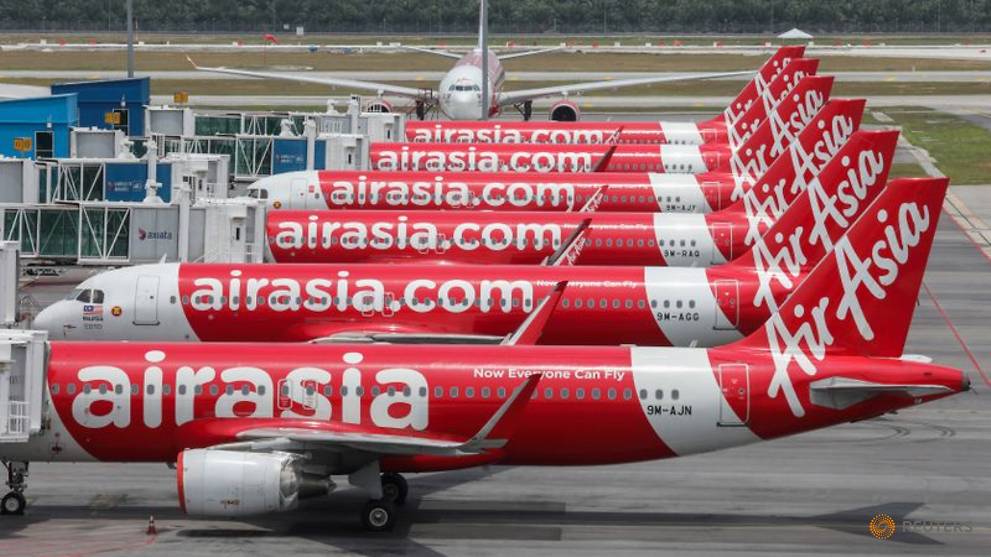
AirAsia planes are seen parked at Kuala Lumpur International Airport 2 in Sepang, Malaysia, Apr 14, 2020. (File photo: REUTERS/Lim Huey Teng)
Naeem said that it has always been his ambition to both be a pilot and also own a food and beverage business, and he is hopeful that he can follow both dreams once the flying industry has returned to normal.
“Perhaps it has been a blessing in disguise that I got laid off, so that I can chase this dream,” said Naeem.
“If I were to start flying again, I would love to continue this business because I believe in sharing good quality food for everyone to enjoy. Hopefully this business can grow further again,” he added.
Don, the flight attendant, is hopeful that the air travel industry will soar again in the near future. He noted that there are plans to bring in the COVID-19 vaccine and he is optimistic it will inspire confidence in Malaysians to resume flying.
“I hope AirAsia will recover and passengers will no longer be afraid to travel. If I’m working, at least I’m assured of a salary,” said Don.
“I don’t mind flying even with the precautions in place. I wear the PPE (personal protective equipment) while flying and ensure I take a shower at the airport after every flight,” he added.
Article From & Read More ( 'Don't know if I'll ever fly again': Pilots, aircrew in Malaysia turn entrepreneurs to tide over COVID-19 - CNA )
https://ift.tt/3lLn1Vn
Business