Optimum Cable TV’s Latest Price Hike Has Gone Into Effect - Cord Cutters News, LLC
Last month, we reported that those using Optimum as their cable TV provider would be seeing a $20+ price hike on their February bill. Now, those increased prices have gone into effect, and many customers are saying they’re surprised by their new bill.
When we first reported on the increase, Altice reached out with the following statement.
Our recent rate adjustments reflect the rising cost of programming, which continues to impact pay-tv pricing industrywide. We continue to invest in our network and services to bring more value to our customers, including launching faster broadband speeds and making enhancements to our Altice One platform, and we offer a variety of broadband and video packages to meet all needs and budgets.
Optimum’s high end Premiere plan now costs $129.99 per month before taxes, fees, and device rentals. The sports package has increased from $10 to $15 per month. Broadcast TV fees have increased from $7.49 to $9.99 per month. Regional sports fees have also increased from $8.97 to $10.47.
These prices are for new customers. Existing customers will have monthly increases capped at $14.50 per month, according to an Altice spokesperson.
While the price hike was announced last month, many customers were not aware of the increase and were surprised by their new bill. The warning was buried in customers’ January bills, in a section labeled “Optimum Updates.” For those who have gone paperless, the only way to find the notice was to open the PDF version of the bill.
Turnout for cable rate public hearing low; new reservoir plans due by Friday - State-Journal.com
Only one person spoke Tuesday during a public hearing on cable rates at a special meeting of the Frankfort Plant Board.
FPB cable customer Kathy Warren said she’s willing to pay the rate increase because she loves her cable service with the Frankfort Plant Board and prefers it over streaming services.
At the Jan. 21 meeting of the municipal utility’s governing board, FPB Telecommunications Product Manager Harvey Couch announced the proposed rates.
If the rates are approved at the Feb. 18 board meeting, cable subscribers with the limited service package will see their monthly customer charge rate drop from $16 to $12.79, a 20.06% reduction.
Customers with the classic service package, however, will see their rates increase 3.7%, from $67 to $69.50.
There was also a public hearing to discuss the photo classified advertising rate changes for Channel 3.
Currently, one page is $35 per week and $120 per month; two to four pages are $200 per month; five to nine pages are $315 per month; 10 to 14 pages are $420 per month; and 15 or more pages require a special quote.
The proposed rates are $20 per page for one month, $15 per page for 6 months and $10 per page for 12 months. There will also be a $20 per page production charge unless provided by the client.
Media Services Manager Scott Stafford said the majority of ads on Channel 3 are from Realtors.
Stafford said in the internet age, the current pricing is outdated. In order to be more competitive and to attract new ad customers, these changes are necessary.
No one spoke during the public hearing.
The plant board will accept oral and written comments on the proposed cable and photo classified advertising rate changes until the end of business hours Monday.
Comments can be submitted at 502-352-4372 and fpb.cc
The plant board will hold its regular monthly meeting Feb. 18 at 5 p.m. at the FPB Administration Building, 151 Flynn Ave.
At the end of the special meeting, the board went into closed session to discuss pending litigation involving the Tanglewood reservoir.
At its Jan. 21 meeting, the board voted to submit new reservoir plans to the Frankfort-Franklin County Planning Commission in time for its March meeting.
The deadline to have those plans submitted is Friday.
At a special meeting in November, the plant board voted to direct staff to prepare and forward a proposed settlement agreement and release in relation to a lawsuit against the city over the now 135-year-old reservoir that holds the city’s water supply.
More than a year ago, FPB planned to replace the old reservoir with a new 7-million-gallon, $3.8 million water tank.
Those plans were halted when the Frankfort-Franklin County Planning Commission recommended denying the project in August 2018 because FPB’s plan was “not in agreement with the comprehensive plan.”
The Tanglewood Neighborhood Association also opposed FPB’s plan, saying it would harm property values in the area. Instead, the association suggested FPB replace the two existing tanks with ones of identical size to preserve the neighborhood’s aesthetics. The Frankfort City Commission publicly backed the alternative plan.
A direct vote. How refreshing! After the Iowa caucus debacle last week, New Hampshire heads to the polls today for its first-in-the-nation primary. Unlike the arcane caucus system in Iowa, the New Hampshire primary is a direct vote -- no election app required. Granite Staters will cast paper ballots, and we should know the winner by the end of the night. Voting is already underway now, most polls close at 7 p.m. ET (4 p.m. PT) and results across the state should start flowing in soon after.
A win or strong showing in New Hampshire can propel a campaign forward into the next primary stops in Nevada and South Carolina. Which candidate will come out on top in New Hampshire tonight? It's too close to call, but I can tell you how you can watch the New Hampshire primary results as they happen tonight -- live, for free and without cable.
How to watch the New Hampshire primary without cable
Live coverage of the New Hampshire primary starts at 5 p.m. ET tonight on the CBS News website or CBS News app. You can watch the CBS News livestream for free without authentication, which means you won't have to sign in at all, just start streaming. (Disclosure: ViacomCBS is the parent company of CNET.)
You can also watch for free online at C-SPAN. It will simulcast live coverage from WMUR-TV -- the ABC affiliate in Manchester -- starting at 7:30 p.m. ET, followed by the primary results and candidate speeches starting at 9:30 p.m. ET.
Cord cutters can also watch the NH primary with a live TV streaming service. All of the major networks and news channels will have live coverage, but not every service carries every local network. Check each one using the links below to make sure it includes the local network that you want to watch in your area.
YouTube TV costs $50 a month and includes all the channels news watchers need: ABC, CBS, Fox and NBC along with CNN, Fox News, MSNBC and PBS. Plug in your ZIP code on its welcome page to see which local networks are available in your area.
Hulu with Live TV costs $55 a month and includes ABC, CBS, Fox and NBC along with CNN, Fox News and MSNBC but not PBS. Click the "View channels in your area" link on its welcome page to see which local channels are offered in your ZIP code.
AT&T TV Now's basic, $65-a-month Plus package includes ABC, CBS, Fox and NBC along with CNN, Fox News and MSNBC but not PBS. You can use its channel lookup tool to see which local channels are available where you live.
Sling TV's $30-a-month Blue plan includes Fox and NBC along with CNN, Fox News and MSNBC. Neither of Sling TV's plans include ABC, CBS or PBS. Sling's packages are discounted by $10 for the first month. Enter your address here to see which local channels are available where you live.
FuboTV costs $55 a month and includes CBS, Fox and NBC along with CNN, Fox News and MSNBC but not ABC or PBS. Click here to see which local channels you get.
All of the live TV streaming services above offer free trials, allow you to cancel anytime and require a solid internet connection. Looking for more information? Check out our massive streaming services guide.
Cable Companies Could Be a Threat to Verizon's Wireless Business - Motley Fool
At the time it probably seemed like a great idea. Verizon(NYSE:VZ) has unused capacity built into its wireless network, and it can't convert every single person in the United States into a Verizon Wireless customer. It may as well monetize its network's excess by letting cable giants Comcast(NASDAQ:CMCSA) and Charter Communications(NASDAQ:CHTR) use it as the backbone for their fledgling wireless services.
But in retrospect, maybe it wasn't the best idea after all. Although the two companies' wireless businesses combined still don't hold a candle to Tracfone, Verizon's biggest third party user of its network, it only took the two newcomers a couple of years to catch up with the nation's second-biggest reseller of cellphone service. That's Consumer Cellular, with its three million customers, give or take.
If nothing else, the sheer pace of Comcast's and Charter's growth should prompt Verizon to consider that it's feeding what will become serious competitors.
Wholesale wireless service
They're called a mobile virtual network operator, or MVNO for short. The term simply refers to cellular service providers that don't actually own the network they plug their customers into.
Rather, these small providers lease access to wireless networks operated by bigger names like Verizon and AT&T, and take care of their own billing, selling, and customer service. Tracfone, Net10, Boom Mobile, Straight Talk, and Expo Mobile are just some of the MVNOs that utilize Verizon's network.
Image Source: Getty Images.
It also includes Comcast's Xfinity Mobile and Spectrum Mobile, both of which launched using Verizon's infrastructure, and both of which still appear to be exclusively using Verizon's network.
Most importantly, both are making inroads with consumers very rapidly. Charter began offering cell phone service in the third quarter of 2018, and now serves a little more than one million subscribers. Comcast's service started in the second quarter of 2017, and it's signed up more than two million customers.
That's only a fraction of Verizon's 94.5 million wireless customers reported as of the end of 2019, which boasts numbers similar to rival AT&T's. But the pace is the concern, particularly in light of the advantage cable names stumbled into.
New wireless connectivity isn't totally wireless
The technology of combining WiFi connectivity and physical wires to keep cellphones linked to a network is something most major wireless carriers have tinkered with, as the number of connected devices has exploded and put a strain on spectrum. But the switch, or "handoff" from one connection type or hub to another, has proven tricky and expensive.
Surprisingly, cable companies have had the solution all along. The physical lines they own running down the street to your house can be readily adapted to serve as WiFi antennas called strand-mounted small cells. And Comcast's and Charter's broadband customers may not even realize they're actually utilizing their home wifi when using their smartphones while at home. This mixed connection approach is a far more economical one to operate, letting cable companies into the mobile phone business without complete reliance on others' networks.
And yes, Comcast and Charter have every intention of extracting the benefits of scaling up this hybrid approach. As Charter CEO Tom Rutledge plainly stated during the company's third-quarter earnings call, "We're uniquely positioned to take advantage of wireline and wireless network convergence over time with our fully distributed wireline network."
Moffett Nathanson's analysts believe the cable giants may be thinking in more mercenary terms, though. In October, the firm suggested that Charter may choose to buy citizens broadband radio service (CBRS) spectrum to develop a partial wireless network in places where doing so would yield a strong return on the investment. Yet, the company would continue to utilize Verizon's network in areas where the return on an investment in a home-grown network would be weak.
Exactly what sort of savings this hybrid approach might produce depends on several factors. But Moffett Nathanson's report puts things in perspective, stating that "We suspect that Altice is already assuming they can offload as much as half of their traffic onto strand-mounted small cells, allowing them to sell unlimited plans for just $20 per month."
The same report went on to say "Even without core network control under the Verizon MVNO contract, Charter (and Comcast) look poised to pursue the same strategy by leveraging eSIMS and, in their case, their own strand-mounted small cells," jibing with Rutledge's comment.
If Comcast or Charter can get anywhere close to selling a mobile service for $20 per month (even if it's just to existing internet customers), even the most loyal Verizon customers will have something to think about.
Put it on your radar
It's not an existential threat to Verizon, at least not yet. But it eventually could be.
The MVNO/wholesale industry took shape at a time when the only way to make a mobile phone work was with a direct connection to a tower with a licensed radio frequency. That limitation is no longer in place, and cable companies' infrastructure leaves them well positioned to offer cheap wireless service.
Verizon is in a particularly difficult situation, as Comcast and Charter are content to let Verizon tackle the difficult, less rewarding part of their job just so they can poach its customers.
Cable, Connectors and Water: Not a Good Mix - TV Technology
Don’t cut corners if your cables and connectors will be exposed to the elements
Steve Lampen, industry consultant
ALEXANDRIA, Va.—It would be hard to imagine a more basic subject in the television industry than cable and connectors, as such components have been a behind-the-scenes necessity since the first camera was pointed at the first subject. However, just because cable and connectors have been around since… well, forever, this old product category has plenty of new tricks. Wireless technology might attract crowds, but cable and connectors get the job done.
As stories about severe weather make headlines, the question arises about how to deal with cables that have been deployed that are now exposed to the elements.
“Water and electrical signals are not the best of friends,” said Steve Lampen, an industry consultant who spent a career as a product line manager for Belden and author of the book “The Audio-Video Cable Installer’s Pocket Guide.” “Some might think they are mortal enemies, but there are lots of cables that work perfectly well in water. Some of those are just dumb luck, while others have [water resistance] added in the design and manufacturing.”
Lampen said that a little rain falling on cable is not usually a problem.
“It can get wet in a storm, but will dry out soon after,” he said. “Almost any cable with a plastic jacket can withstand this wet/dry cycle. Of greater consideration in this case is the jacket of the cable, which should be black. Black cable uses ‘carbon black’ as the additive to give it the color, and this material is very good under ultraviolet light, such as sunlight. Any other color can crack and break over time, and allow water inside.”
In addition to using carbon black, Lampen said that the type of material makes a difference for weather resistance.
“Polyvinyl chloride [PVC] is soft and not very water-resistant, although I have heard stories of gray PVC cables underwater lasting more than 50 years,” he said. “A better jacket is polyethylene [PE]. If you can get hard black PE, it is the best plastic at resisting water.”
SERIOUS CONSIDERATION
There is a serious consideration about using PE-jacketed cable, however, since it’s flammable.
“Hard black polyethylene would work great outside and last for many years, but it would not meet any fire code inside,” Lampen said. “If you want riser- or plenum-rated cables, those will most probably not have PE jackets. That being said, there are recently upgraded cables that have indoor/outdoor jackets that meet fire ratings, and yet have good ruggedness for outdoor applications.”
So if you need to roll a production van up to a shoot and deploy cables, getting some rain on them is probably not a disaster if you care for them properly. A bigger concern is when cables are immersed in water for extended times.
“Real problems begin in standing water such as a pool, fountain, ocean or anywhere the cable will not dry out,” Lampen said. “One other place you will see standing water is in conduit. Once conduit fills with water, it is very hard to empty it. Although many designers and architects think conduit is how you ‘protect’ cables, they are sadly mistaken as these cables can fail in only a few months. Pulling them out and reinstalling them does nothing to solve the problem. And, although you can blow the water out of a conduit, the more important question is, how did the water get in there? More than likely, the water will come back in and your new cables will be in standing water yet again!”
Many installers automatically recommend “direct burial” cable for outdoor installations. In many instances, all that needs to be done is to dig a trench and lay in the cable.
“As long as the cable can resist the sharp edges of stones and dirt, you’re good to go,” Lampen said. “When the cable gets wet, most soil will allow the water to pass and the cable to dry out.
“Even direct burial cable comes in variations depending on your application [and wallet],” he continued. “The simplest uses dry water-blocking—this is a layer put inside the cable that looks like a layer of fabric. If there’s a hole in the jacket and water gets to this layer, the material swells up, filling the hole and preventing more water from coming in. Many of these cables have PVC jackets that are not very strong, but if you put a layer of sand below and above the cable, that will reduce the impact on the cable and increase its useable life.”
CONNECTORS
Broadcasters should review their situations and determine the risk of the environment that the
assembly will be exposed to, then select appropriate cables and connectors that reduce the risk.
There is much more that could be said about cable and its ability to withstand environmental assaults, but another factor affecting the performance of cable is how it is terminated. In other words, the connectors on the ends of cables play a major role in how cables function in wet conditions.
At least one manufacturer suggests that wet cables and connectors might be reused if carefully checked.
“If connectors are not sealed you would want to dry the connectors and cables out,” said Steve Cooper, vice president of engineering at Switchcraft. “After checking insulation resistance between conductors, if the insulation resistance is above 100 Megohms, it is probably OK to reuse the connectors and cables before deciding to throw them out. If contact resistance of mated connectors is reading higher than expected you probably want to discard. If they are sealed to IP67 or IP68, they have a better chance of being reuseable.”
Cooper noted that this is the case with cables that carry the typical low-voltage signals used in the television industry. A cable carrying higher voltages should be checked more thoroughly or replaced.
Using the best connector for the job is always smart. Broadcasters should review their situations and determine the risk of the environment that the assembly will be exposed to, then select appropriate cables and connectors that would reduce the risk, Cooper said. These include non-sealed connectors, as well as connectors sealed to IP67, IP68 or IP69K.
Other specialists agree with the practice of selecting the correct connector for the expected (and even unexpected) conditions.
“With wet and stormy weather you always have the risk of connector failures and poor fiber performance, due to the fact that when you disconnect or connect fiber connectors you always have the risk of contamination issues,” said Fabio Röllin, product manager for optical fiber solutions at Neutrik.
Fabio Röllin, product manager for optical fiber
solutions at Neutrik, with a Neutrik opticalCON
Dragonfly connector that has an IP67 environmental
rating.
Röllin pointed out that Neutrik has fiber connectors rated to IP67 in mated condition, which is tested by immersion in 1.2m of water for more than 30 minutes.
“Storms and harsh weather conditions are challenging for productions all over the globe,” Röllin said. “I strongly recommend the choice of products and solutions that are truly specified for these challenging applications. Only then you will save time and avoid potentially catastrophic situations during your productions.”
WEAKEST LINK
Still, the connector is probably the weakest link in the chain when it comes to preventing unexpected ingress of water.
“Connectors are one of the most difficult parts of this puzzle,” Lampen said. “First, the cable is cut just to put them on. Second, the nature of a connector is to open things up and make connections. There certainly are water-resistant connectors, but finding one for each water-blocked cable is not an easy task.
“One might assume that all the connections are made above ground, where they can be protected, but that is not always possible, especially with very long cables, more than 1,000 ft. (304m),” Lampen continued. “Now you can order long cable runs from a manufacturer [to minimize the chance that a connection will be in an undesirable location.]”
Lampen detailed the importance of the metals used in connectors, and explained the options.
“Commonly, you have a choice of nickel, silver or gold,” he said. “These are just a layer on the pin which might be brass. Nickel, of course, is the cheapest and has reasonable corrosion-resistance. Silver, on the other hand, has the lowest resistance—if you plug these connectors together and never unplug them again, then silver is the best choice. If you unplug them, move them around, and plug them back in (or leave them unplugged for a while), silver is not so good. Silver corrodes or tarnishes, which is why are forever cleaning real silver flatware or coffee pots to get the tarnish off.
But silver oxide (tarnish) is the same conductivity as regular silver so what’s the problem?
The problem, according to Lampen, is that the tarnish adds a layer on the outside of the object; in other word it changes the dimensions of everything.
“A silver pin that is oxidized is very slightly wider than it is in an unoxidized state. Where the atmosphere around these connectors has a lot of water vapor [and other contaminants], the oxidation will increase, with thicker layers, more quickly created. Eventually, these connectors will have intermittent connection points because the dimensions of the pins and jacks has changed so much.”
MOST PROTECTION
The ultimate connector metal is gold, Lampen said. Gold does not oxidize and has good electrical characteristics (although not as good as silver). For cable that offers the most protection from water damage, Lampen recommends gel-filled cable. If cables and connectors have been flooded with water, the general recommendation is to discard it all and start from scratch.
“It’s a crapshoot about using them again,” Lampen said.
The bottom line is that adding water to cable and connectors is a recipe for failure. “There is no cable or connector that is truly water-proof,” Lampen said. “Every cable and connector will eventually fail—it might take years or decades, but it will fail. If people are walking on these cables, even for one weekend, I would be hesitant about reusing them. Occasional wet/dry applications are a lot easier than standing water.”
Lampen mentioned a major flood in a large city that put an outdoor display and sound system underwater for weeks. The city sued the manufacturers but lost, as there was nothing in the manufacturers’ catalogs or online that said the cable used was water-blocked or special in any way.
“This could be a situation where wireless connections might make some sense,” Lampen said. “Of course, they have a whole encyclopedia of problems of their own.”
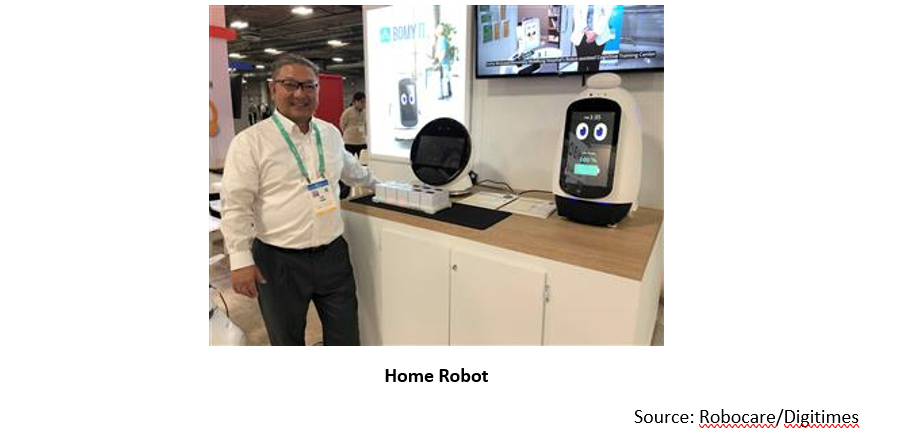
Thousands of new services and technologies were unveiled by more than 4,000 companies during January’s CES 2020. Spanning four days and over 2.9 million square feet (or more than 50 football fields) in Las Vegas, CES is the largest consumer electronics show in the world. While there is intense media focus on the new TVs and cars, the show also dedicates significant space to the Internet of Things, Gaming, Robotics and the Smart Home.
Working in the cable industry, I focus on emerging services requiring network connectivity, which seem to be everything these days, from refrigerators to wearables to home assistant robots.
Different services and applications have unique requirements for network connectivity. Historically, the headlines were about the fastest speeds, with 1 Gbps being viewed as a significant milestone. Over 80% of homes served in the U.S. now have 1 Gbps available in their service area. The reality is that few services actually require 1Gbps connectivity, but offering this much capacity does help with concurrent users in the home – for example, four family members each consuming 200 Mbps.
While speed will continue to be a significant metric to monitor and stay ahead of the service demand curve, low latency and high levels of security and reliability are also metrics that network operators must engineer into their infrastructures to support these emerging services. For example, many financial services and gaming platforms require low latency. Telemedicine and security cameras require both high security and high reliability. Network connectivity should therefore not be viewed simply as a speed race, but rather as a multi-variant offering of speed, latency, security and reliability.
The cable industry has recognized the increasingly higher benchmark for network connectivity and launched the 10G platform at CES 2019. While speed is still a central pillar of this platform, latency, security and reliability are also foundational.
To support these connectivity requirements, here are some of the 10G developments currently underway:
CableLabs will soon complete the latest DOCSIS® specification, DOCSIS 4.0. DOCSIS 4.0 supports both Extended Spectrum DOCSIS (ESD) and Full Duplex DOCSIS (FDX) capabilities. ESD will expand the available coax spectrum to 1.8 GHz (from 1.2 GHz available today with DOCSIS 3.1). More available spectrum translates into more capacity for customers. FDX provides for concurrent use of the coax spectrum for downstream and upstream traffic, through interference cancellation and smart scheduling technologies.
Low latency DOCSIS (LLD) is also supported in the DOCSIS specification suite. LLD reduces latency for those applications that need it, without slowing down other traffic. LLD introduces an approach wherein data traffic from applications that aren’t causing latency can take a different logical path through the DOCSIS network without getting hung up behind data from applications that are causing latency. {for more see https://www.cablelabs.com/technologies/low-latency-docsis}
Another CableLabs innovation is Micronets. Micronets is an on-premise network management system that manages all of the user’s devices and connections, monitors traffic flow and autonomously addresses security vulnerabilities. {for more information about Micronets, see https://www.cablelabs.com/technologies/micronets}
SCTE•ISBE has launched a Standards working group focused on the human factors of network reliability. No matter how much an operator automates their network, there is still the human piece of the puzzle. This working group will produce operating best practices to minimize human errors, resulting in higher network reliability.
I always look forward to CES each year to see where the consumer electronics field is going. I am continually confidant that the cable industry is moving aggressively in the right direction to provide exceptional network connectivity to support these emerging services.
The SCTE-ISBE Standards group also is launching several new working groups focused on emerging services such as Aging in Place, Telemedicine, Smart Cities and Autonomous Vehicles. If you are interested in participating in, and guiding how, these new services will be designed, deployed, monitored and maintained across cable networks, then check out www.scte.org/standards to see how you can join in.
Will Altice's Exodus of Cable Customers Accelerate in Q4? - Motley Fool
Altice USA(NYSE:ATUS) has experienced fewer customer losses that some of its rivals, such as Comcast(NASDAQ:CMCSA), but they've been steady nonetheless, and after raising its monthly rates for its Optimum cable TV service by $20 a month, they just might begin accelerating.
Cord-cutting has always been an ominous cloud for TV service providers, and cable operators have increasingly been handing their customers the scissors by embracing streaming services of their own, like Comcast's Peacock TV. But that may not be working, either.
Although Altice seems to be doing better than most, let's look at what investors might expect when the cable operator reports fourth-quarter results on Wednesday, Feb. 12.
Image source: Getty Images.
Unplugging for good
The outlook hasn't looked promising for cable operators lately. Comcast, for example, reported that it lost another 149,000 residential video subscribers in its own fourth quarter while AT&T(NYSE:T) lost 142,000 cable internet connections plus 41,000 DSL customers. All told, AT&T lost 945,000 traditional pay-TV subscribers during the period, or about 10,000 subscribers every day.
Altice, on the other hand, lost 32,000 cable customers in its third quarter, which ended on Sept. 30, bringing the total to almost 94,000 year to date. Yet it was able to offset the decline somewhat by adding 15,000 broadband subscribers in the quarter, or 84,000 for the first nine months. So it's not seeing the same hemorrhaging as the others, though it has lost 38,000 telephone subscribers, too.
Paying more for less
Like its peers, though, Altice has increased its subscription rates, which will very likely cause more customers to decide they don't need the full range of services the operator offers if it's going to cost an additional $240 a year.
Even if customers aren't paying the full price because of discounts, cord-cutting is now a very simple and cheap alternative. Depending on the type of TV or movie viewing someone does, it can cost subscribers just a fraction of what they were paying before, if not make it completely free.
That hasn't worried CEO Dexter Goei, who remains upbeat. Even though Altice's performance in the third quarter was weaker than expected, Goei highlighted the company's investments in Altice Mobile, Altice One, and Altice Fiber, which he expects will receive more marketing in the future. He added, "As we now turn our focus to scaling our efforts, we look forward to accelerating our revenue and adjusted EBITDA growth in 2020 as we begin to realize the benefits of our investments."
A skinnier option
But that wasn't enough to prevent Altice from lowering its full-year guidance. Even though it had just raised its outlook in the second quarter, it cut it again in the third and said it expects revenue growth to be about 2.5%, down from its previous guidance of 3% to 3.5%, because it's expecting a slower ramp up from Altice Mobile handset equipment. The new outlook is also somewhat below its original guidance of 2.5% to 3% growth.
So Altice might not see the dramatic subscriber exodus currently underway at AT&T and Comcast, but with analysts looking for just 2% revenue growth to $2.51 billion and earnings of just $0.20 per share, the cable operator might not produce the clear investment benefits it's made pay off as quickly as hoped.
Industry Spooked by ‘Cable Haunt’ - Multichannel News
Halloween came early for the cable technology world in January, when four Danish internet security researchers identified “Cable Haunt,” a security flaw affecting more than 200 million cable modems equipped with Broadcom chips in Europe alone.
The Cable Haunt vulnerability is focused on the spectrum analyzer, a standard component of Broadcom silicon that protects modems from signal surges and other disturbances piped in by the coax.
The spectrum analyzer is often used by internet service providers for debugging and improving connection quality. Access to it is typically limited to connections originating within the managed network.
Researchers at Danish firm Lyrebirds said the Broadcom chipset’s spectrum analyzer is vulnerable because it uses default credentials and lacks protection against denial of service-based “rebinding attacks.” They also said the chipset contains a firmware programming error.
Hackers could exploit the vulnerability and get users to accept malicious web pages, researchees said. Once that’s done, hackers could change default domain name system (DNS) servers; conduct remote man-in-the-middle attacks; swap code and change firmware, config files and MAC addresses; and do other evil things.
The vulnerability is widespread, they added. “The reason for this, is that the vulnerability originated in reference software, which have seemingly been copied by different cable modems manufacturers, when creating their cable modem firmware,” the researchers said on cablehaunt.com, a website they set up to publicize the issue. “This means that we have not been able to track the exact spread of the vulnerability, and that it might present itself in slightly different ways for different manufacturers.”
The group also published a white paper accessible on the site. They hope that ISPs and other tech firms release firmware updates and patch any vulnerabilities.
Broadcom said it released several firmware fixes last year. Others have released fixes, too. Meanwhile, ZDNet, which had engineers probe the vulnerability, described an attack using Cable Haunt as being “very hard to pull off.”
The Oscars 2020 free live stream: How to watch online without cable - nj.com
“The 92nd Academy Awards," also known as “The Oscars,” will air on Sunday, Feb. 9 at 8 p.m. to celebrate the best films of 2019. This will be the ceremony’s second year without a host, and it will air live from the Dolby Theater in Los Angeles.
Here’s the information you’ll need to watch “The 2020 Oscar Awards” online without cable.
"The Academy Awards” ceremony will begin its broadcast live on Sunday, Feb 9, at 8 p.m. on ABC. It will follow directly after ABC’s 6:30 p.m. “The Oscars Red Carpet Show” coverage.
If you’re a cord-cutter or don’t have cable, you can live stream the "2020 Oscar Awards” on Hulu Live TV. (To get a free trial, click the Hulu logo in the top-left corner and choose the Hulu + Live TV package)
“The Academy Awards” celebrate the finest films and performances of the year. According to ABC’s official website: Oscar-nominated producer Lynette Howell Taylor and producer Stephanie Allain will produce the 92nd Oscars. It will be their first involvement with the Oscars, which airs live on ABC and broadcast outlets worldwide on Sunday, Feb. 9, 2020.
Here’s a look at those artists nominated for the “2020 Oscar Awards,” courtesy of the official YouTube channel of The Sun:
There are plenty of other awards ceremonies and events like the “Oscar Awards” airing in the near future. Look for them on Hulu Live TV. (To get a free trial, click the Hulu logo in the top-left corner and choose the Hulu + Live TV package).
Here are some additional stories and articles about “The 2020 Oscar Awards,” including a look at Noah Baumbach breaking down a scene from his Oscar-nominated “Marriage Story,” starring Adam Driver and Scarlett Johansson:
 Last month, we reported that those using Optimum as their cable TV provider would be seeing a $20+ price hike on their February bill. Now, those increased prices have gone into effect, and many customers are saying they’re surprised by their new bill.





 By Chris Bastian